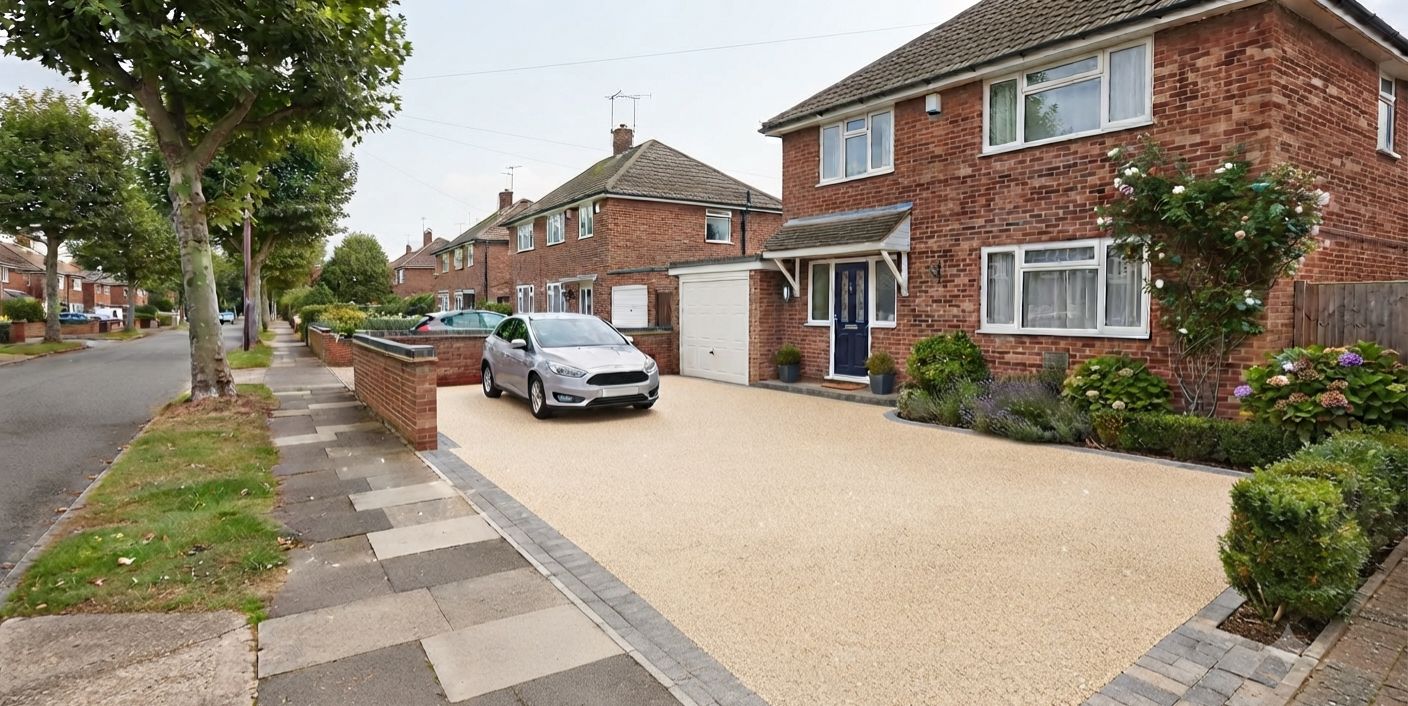
SuDS compliant, permeable
Laid at 18mm over a permeable base, so rainfall drains through the surface instead of running onto the road. That keeps a front driveway inside the SuDS rules and, in most cases, out of planning permission altogether.

Upgrading your driveway requires a solid foundation and a flawless finish. We design and install high-quality resin bound, block paving, tarmac, and gravel driveways, expertly laid by our own skilled teams across Portsmouth, Southampton, and Winchester.
A smooth, jointless trowelled finish that lets water straight through. Resin bound is the surface most Hampshire homeowners ask for when they want a clean front without planning problems, and it is the one we lay most often.
Laid at 18mm over a permeable base, so rainfall drains through the surface instead of running onto the road. That keeps a front driveway inside the SuDS rules and, in most cases, out of planning permission altogether.
Dig out to 200mm, then compacted MOT Type 3 or a permeable open graded stone, followed by a 50mm porous macadam binder course. Resin poured straight onto old concrete is the usual reason a driveway fails, so we do not do it.
We specify a UV stable aliphatic resin with kiln dried natural aggregate. Cheaper aromatic resin yellows within a couple of summers. Ours holds its colour, and comes with a written guarantee.
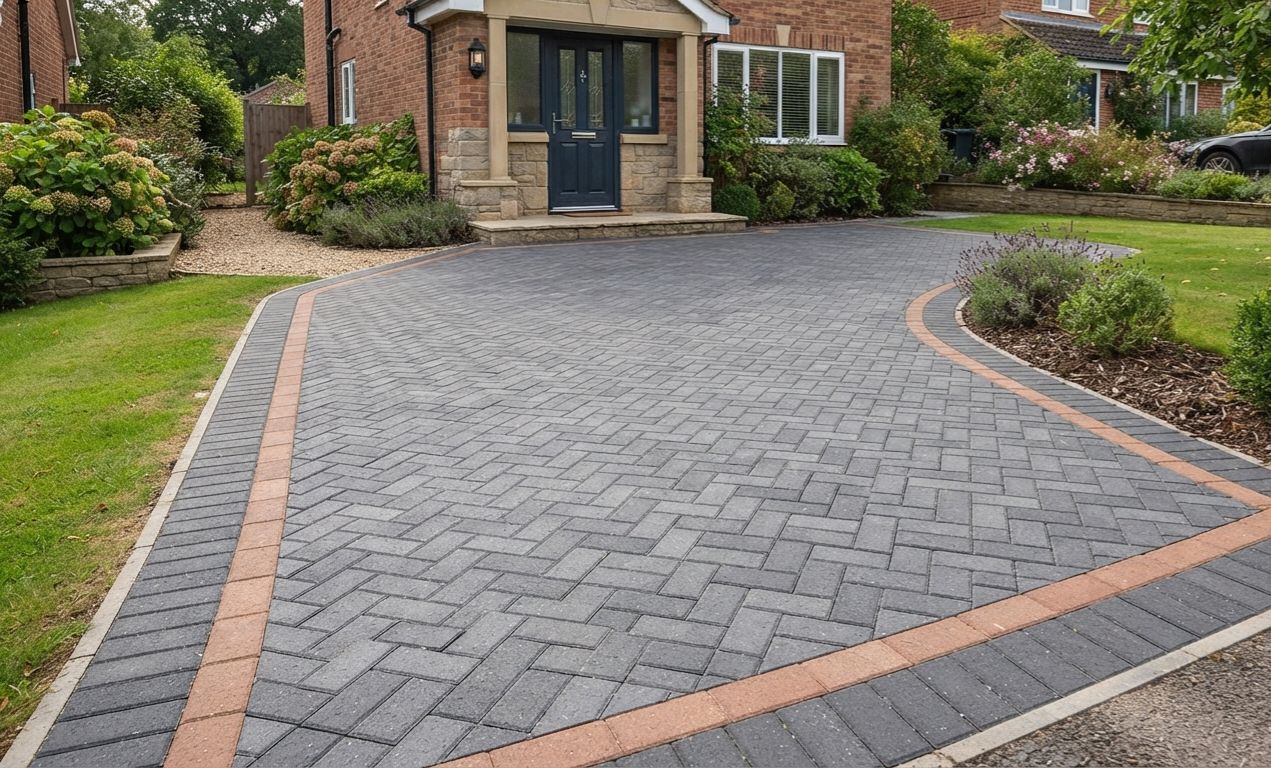
Still the most forgiving driveway surface there is. A single damaged block lifts out and is replaced, and the pattern and border let you frame a house rather than just cover the ground in front of it.
45 degree or 90 degree herringbone for driveways, because the interlock resists a turning car. Stretcher bond and basketweave for paths and aprons. A contrasting double border course ties the layout together and hides the cut line.
Every edge is haunched in concrete, on both sides where a vehicle can ride over it. Blocks spread sideways without restraint, and that is what causes the rippled, sunken edges you see on a ten year old driveway.
150mm of compacted MOT Type 1 under 30mm of sharp sand, laid in layers with a plate compactor, not tipped in one go. Deeper where the ground is soft clay or where a van will stand on it.
Falls set away from the house at roughly 1:80, with a linear channel drain at the threshold or a permeable block system where the water has nowhere to go. Kiln dried jointing sand, or a polymeric sand where weeds are a problem.
Send us the measurements and a photo of the frontage. We will tell you what the ground will take, what it will cost and how long it will be off the road.
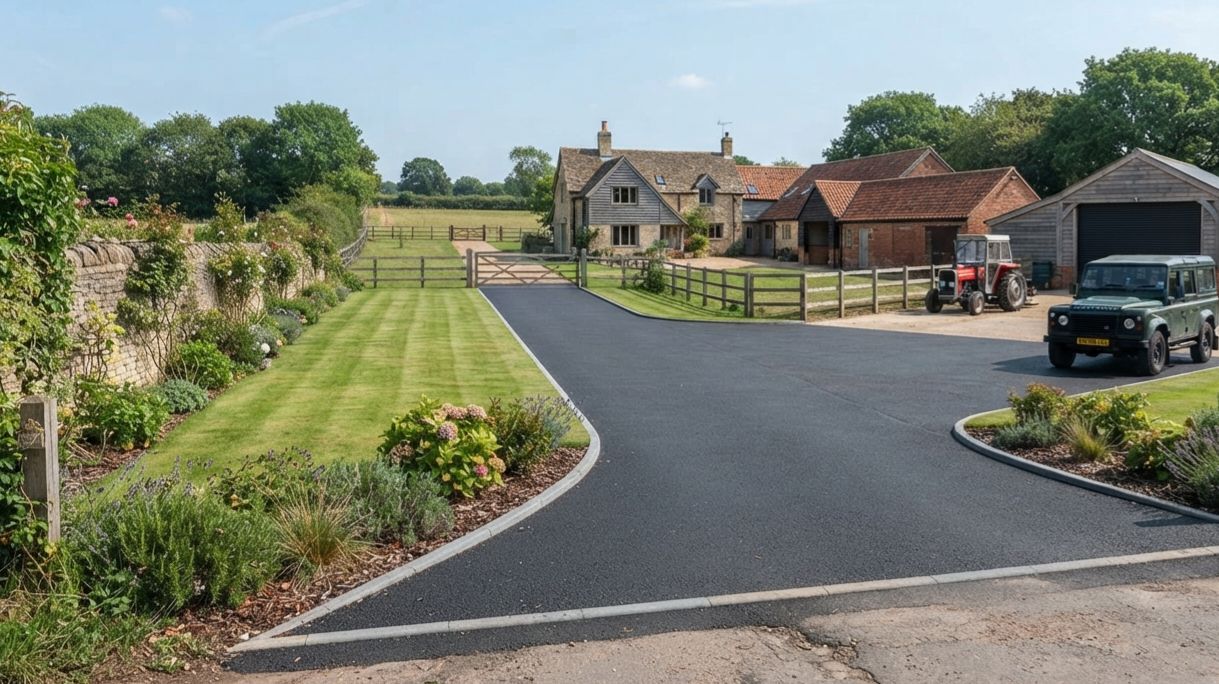
The surface to choose when the area is large, the budget matters or the traffic is heavy. A machine laid, rolled tarmac drive goes down in a day or two and takes a delivery lorry without complaint.
It is not the right answer everywhere. Tarmac is not permeable, so on a front driveway we either fall it to a soakaway or a channel drain, or we tell you plainly that resin or a permeable block is the better fit for your frontage.
Standard black bitmac, or red oxide pigmented asphalt where a frontage needs to lift against a brick house. Red is laid the same way, it simply carries a pigment through the wearing course, so the colour goes right through the mat.
150mm compacted MOT Type 1, a 50mm 20mm dense binder course, then a 20mm to 25mm 6mm wearing course rolled hot. A single thin skim over an old surface is the cheap job that cracks in the first winter.
For yards, farm accesses and commercial parking we increase the sub-base to 250mm and lay a heavier binder, with kerbs or an edging strip so the mat cannot spread at the sides under a turning vehicle.
Dropped kerb work and any crossing onto the public highway is done to the county council specification, with the correct permits in place before we start.
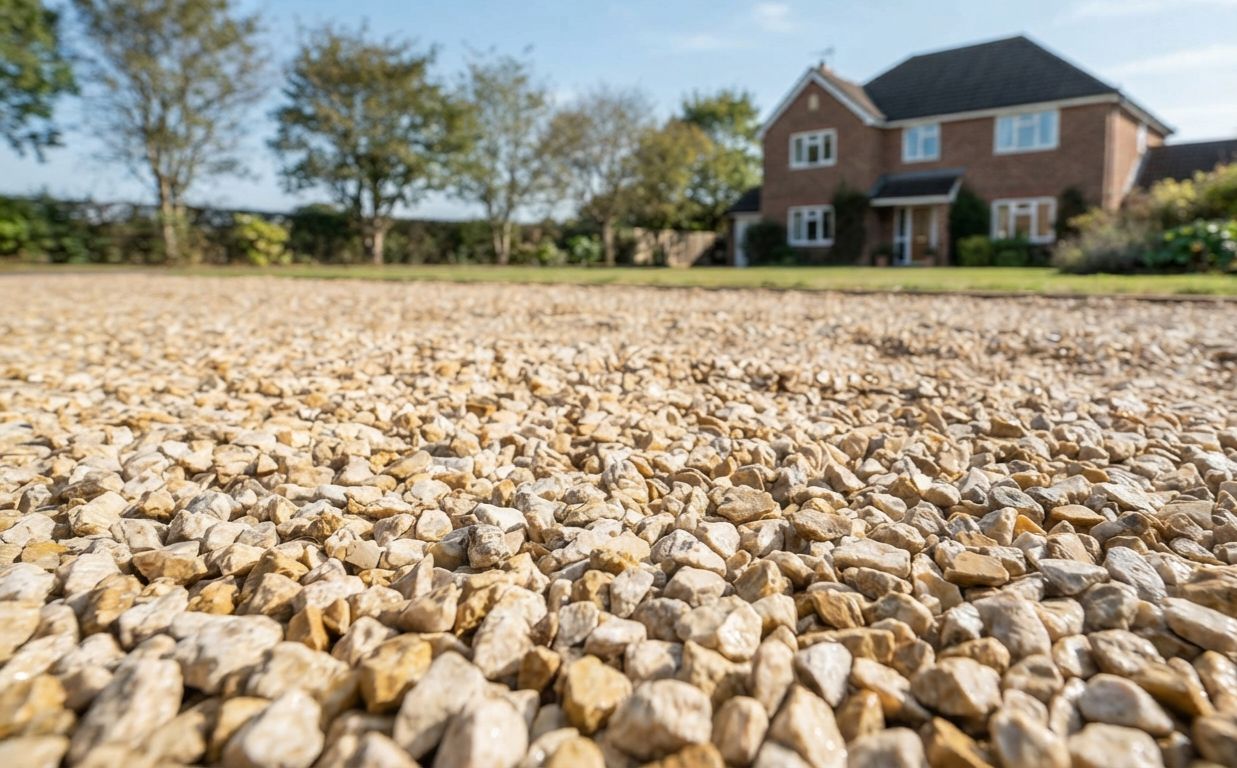
The cheapest square metre rate of the four, and the one most often laid badly. Loose stone over a membrane will rut and migrate onto the pavement within a season. Laid into a grid, it stays where you put it.
Interlocking recycled polypropylene cells, typically 30mm or 40mm deep, laid over a compacted 100mm to 150mm Type 3 base and filled proud with 10mm angular gravel. The cells carry the load, so the drive is firm underfoot, pushchair friendly and stays level where a car turns.
10mm to 20mm angular gravel for anything that is driven on, since rounded pea shingle rolls underfoot and will not lock together. Cotswold buff, Dorset flint, granite and slate are the usual choices locally. We bring samples to site before you decide.
A gravel drive over an open graded base is permeable, so it meets the same SuDS expectation as resin without a drainage run. Useful on a large front garden where a soakaway would be awkward or expensive to dig.
Timber, steel or block edging on every side, set slightly proud, with the gravel kept about 5mm below the top of the grid. That is what stops stone walking out onto the road and keeps the topping up to a barrow every few years rather than every winter.
Send us the details and we will book a site survey across Portsmouth, Southampton and Winchester.