Skip to content
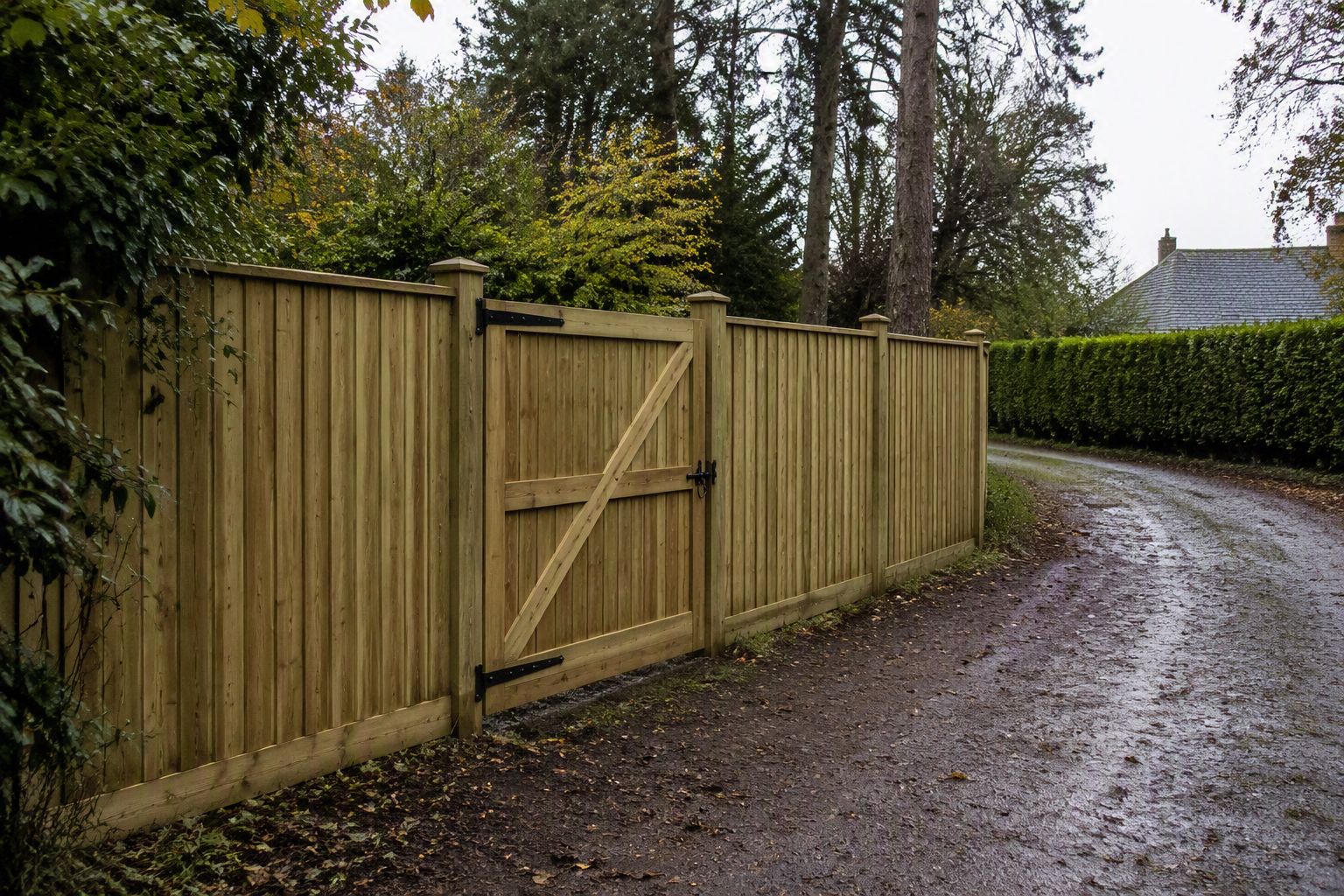
A run of new closeboard timber fencing along a garden boundary

Fencing and gate installers in Hampshire

Timber fencing, composite panels, acoustic screening and bespoke driveway gates, set on posts dug and concreted deep enough to hold the line.

Fencing, gates & structures

Fencing & Bespoke Gates

A boundary is the first thing anyone sees and the first thing to fail if it is put in badly. We install fencing and gates across Hampshire as a groundworks job first and a joinery job second.

Four strands cover almost everything we are asked for: closeboard and featheredge timber fencing, composite panels for owners who never want to paint again, acoustic screening on roadside and railway boundaries, and bespoke driveway gates in timber or metal, manual or automated. Everything is set out on site with you, priced in writing, and installed by our own teams.

Timber fencing

Closeboard and featheredge on treated timber, posts concreted, gravel boards at the base.

Composite panels

Colour stable boards in aluminium posts. No repainting, no rot, very little to do.

Acoustic screening

Dense, gap free barriers for roadside and railway boundaries, sealed to the ground.

Driveway gates

Bespoke timber or metal, hung on steel or brick piers, manual or fully automated.

A timber boundary fence with a matching gate along a lane

Boundary fencing and a matching gate, Hampshire

The four we build most

Each one solves a different problem. What matters is picking the right material for the boundary you actually have, not the cheapest panel on the yard.

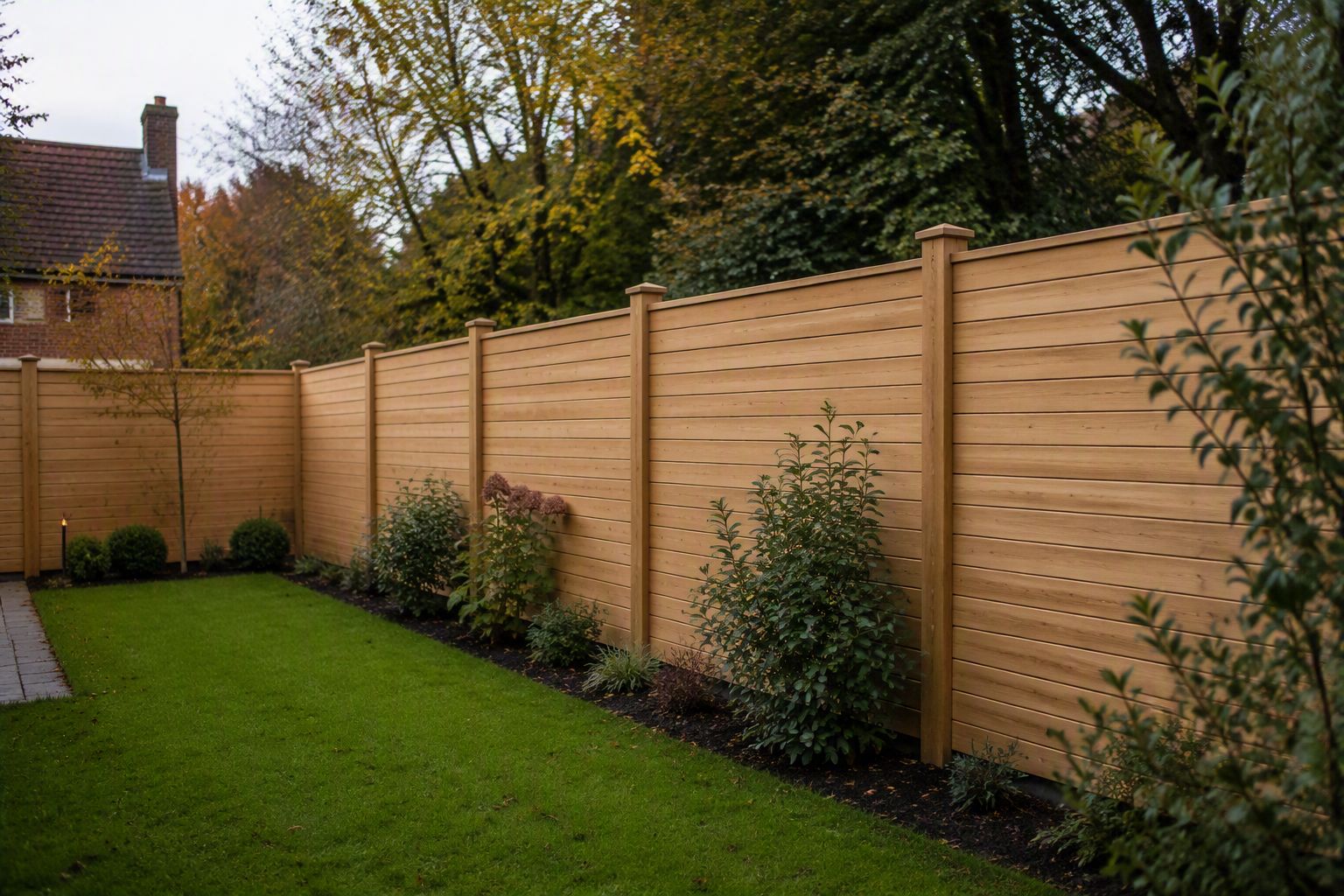
Horizontal timber fencing along a garden boundary with planted borders

Timber fencing

Closeboard and featheredge built on site rather than dropped in as ready made panels, so the run follows the ground and the levels stay right across a slope. Every component is pressure treated before it reaches you.

  • Closeboard with arris rails, or featheredge board by board
  • Posts concreted, not driven into soft ground
  • Pressure treated timber throughout, cut ends re-treated
  • Concrete gravel boards keeping timber off wet soil
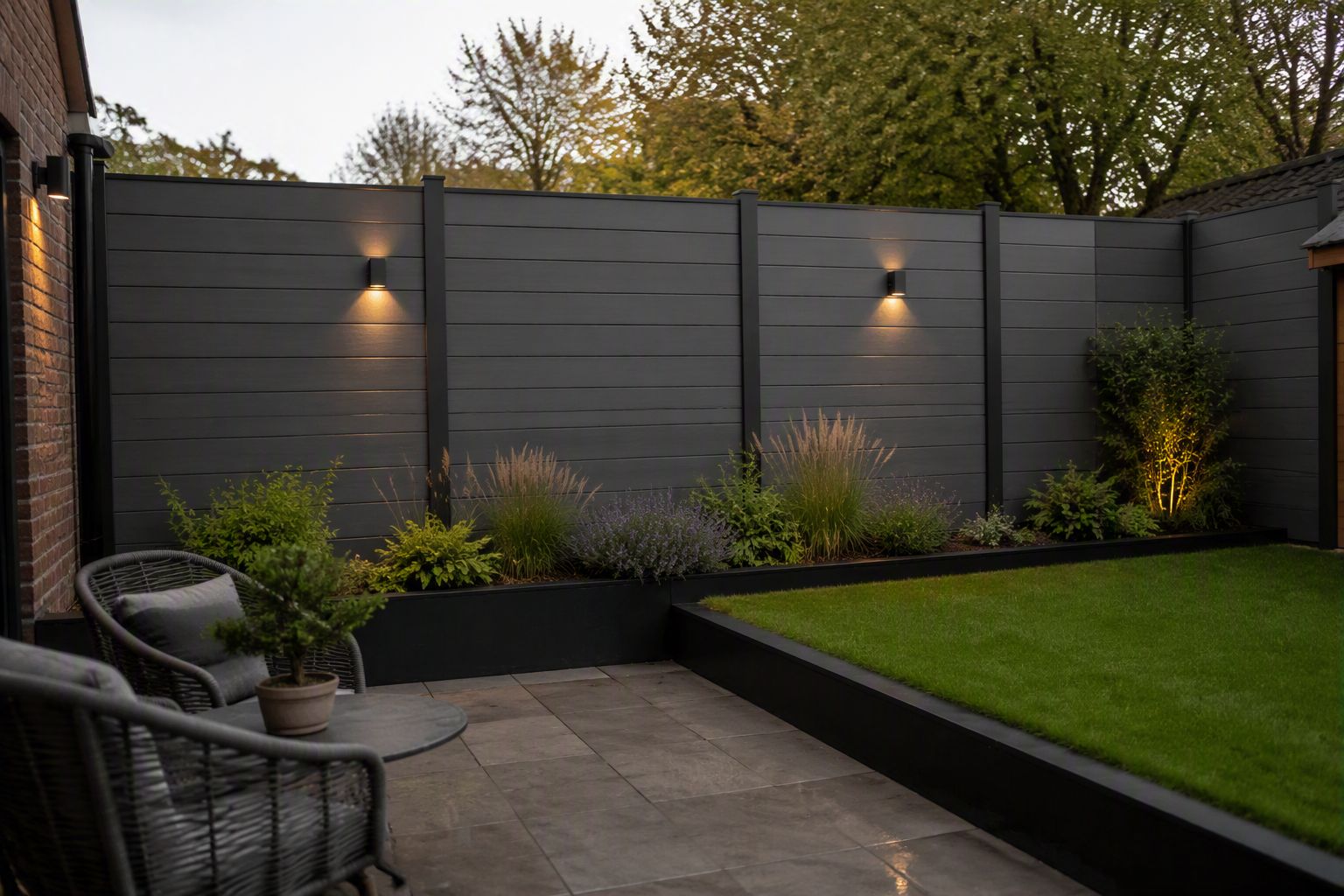
Grey composite fence panels with wall lights around a paved garden

Composite panels

For anyone who does not want to spend a weekend every year with a brush. Composite boards slot into aluminium posts, hold their colour, and need nothing beyond a wash down.

  • No repainting, no staining, no annual treatment
  • Colour stable, it settles slightly in year one then holds
  • Will not rot, warp or split the way soft timber can
  • Costs more to install, then costs almost nothing to keep
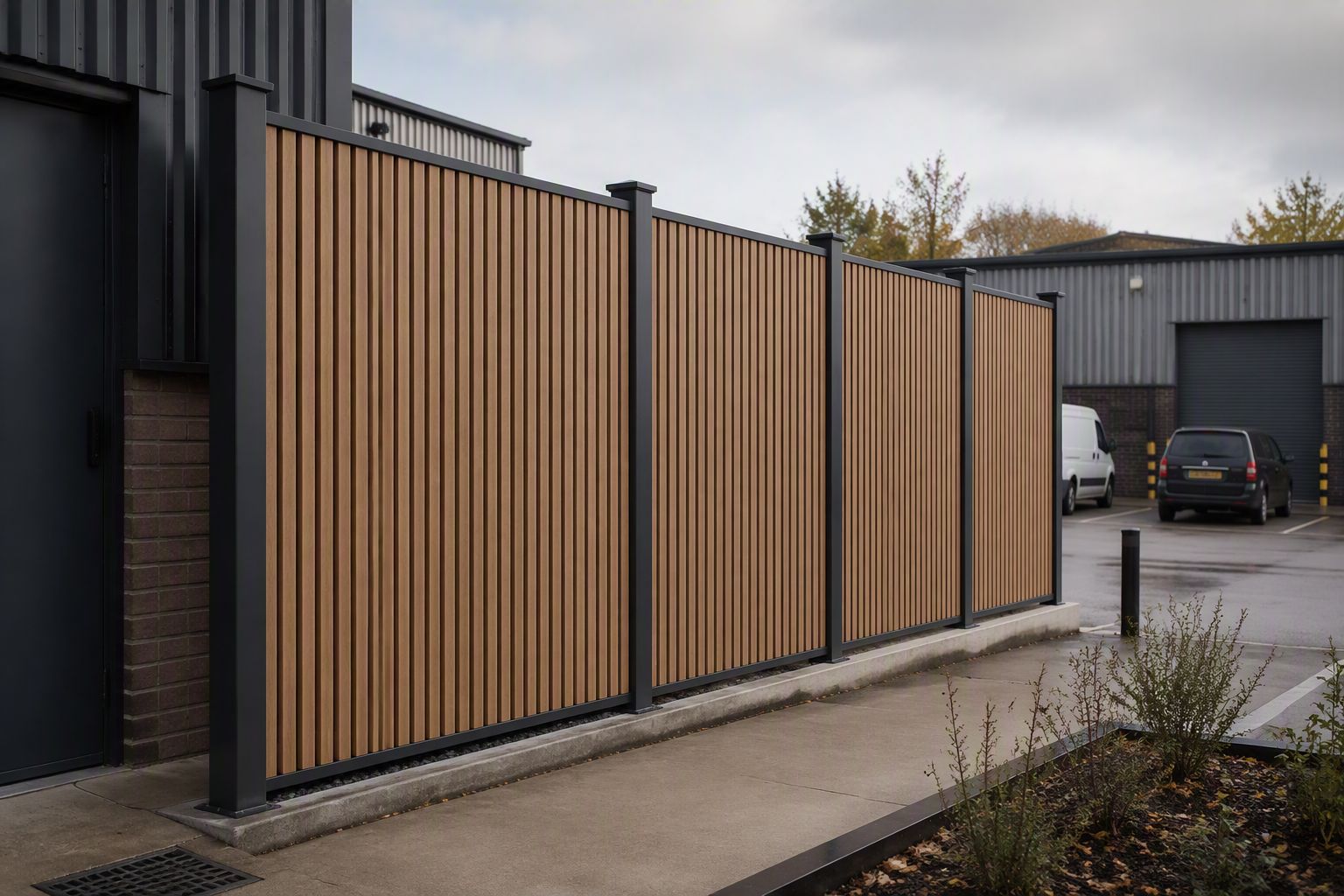
A tall timber faced acoustic screen along a roadside boundary

Acoustic screening

Sound is stopped by mass and density, not by height alone. Acoustic fencing uses thick tongue and groove boarding with no gaps anywhere in the run, sealed down to ground level so noise cannot pass underneath. It suits roadside and railway boundaries where an ordinary panel does nothing.

  • Heavy tongue and groove, gap free from post to post
  • Sealed at the base, the usual place sound leaks through
  • Heavier posts and deeper holes to carry the extra weight
  • Best on roadside, railway and busy junction boundaries

Being straight about it: a fence reduces traffic and rail noise at seating height, it does not soundproof a garden. It works on sound travelling straight at you along the ground. It cannot do much about noise coming over the top from a raised road or from aircraft. We will say on site whether it is worth the money.

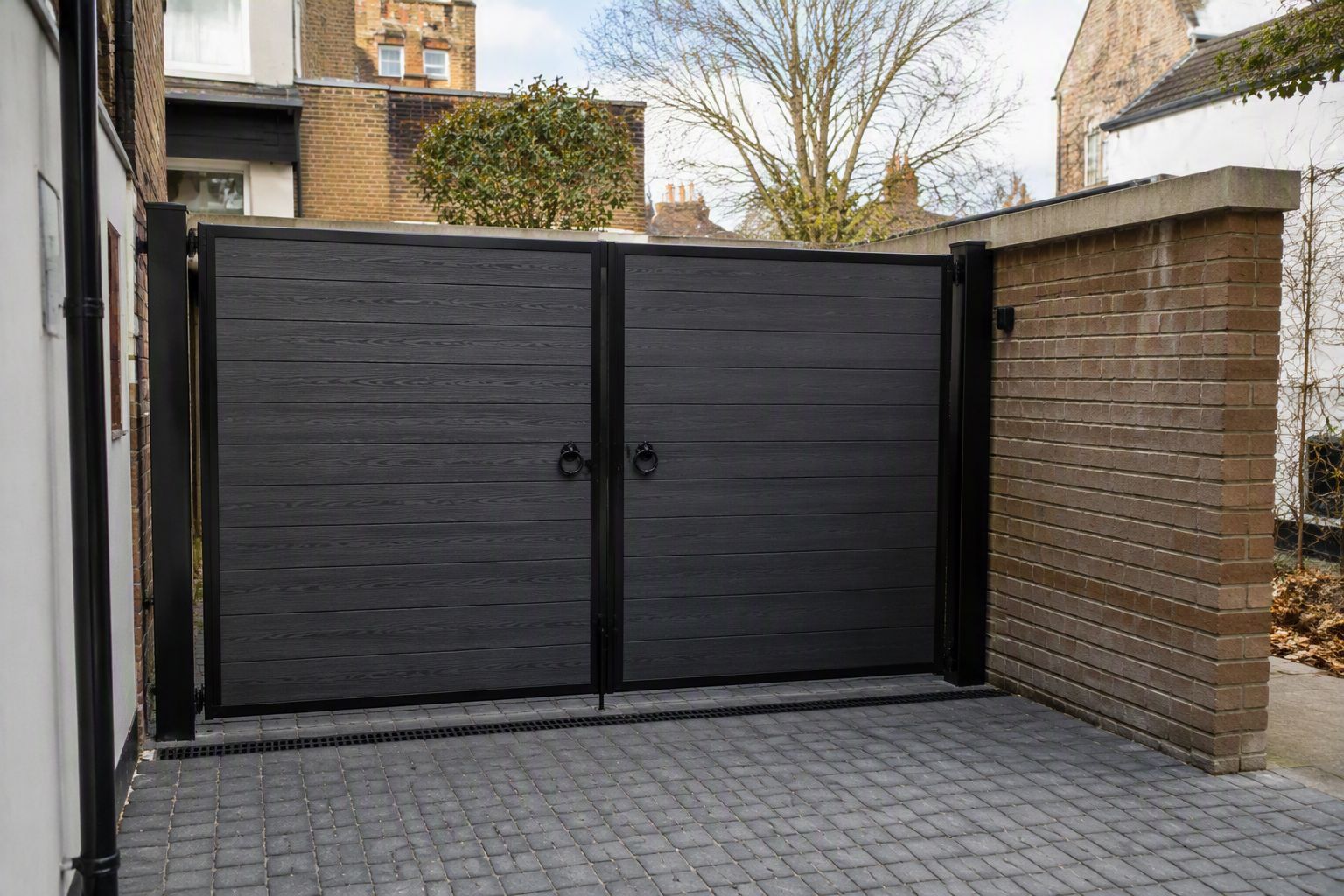
A pair of bespoke dark driveway gates hung between masonry piers

Bespoke driveway gates

Made to the opening you have, not trimmed to fit a stock size. Timber for a softer frontage, steel or aluminium where you want something finer and stronger. Manual to start with, or automated from day one with the ducting laid while the ground is already open.

  • Timber, steel or aluminium, swing or sliding
  • Hung on steel posts or brick piers set on a proper footing
  • Automation with safety edges, photocells and a manual release
  • Intercom, keypad or fob access, plus a pedestrian gate if needed

Know roughly what your run costs

Send the length of the boundary and a photograph. We measure properly on site, then price it in writing before anything is booked in.

Get a free quote

What decides whether a fence sees out the winter

Almost every failed fence in Hampshire failed at the same place: below ground. The panels are the part you see, the posts are the part that matters.

01

Post depth

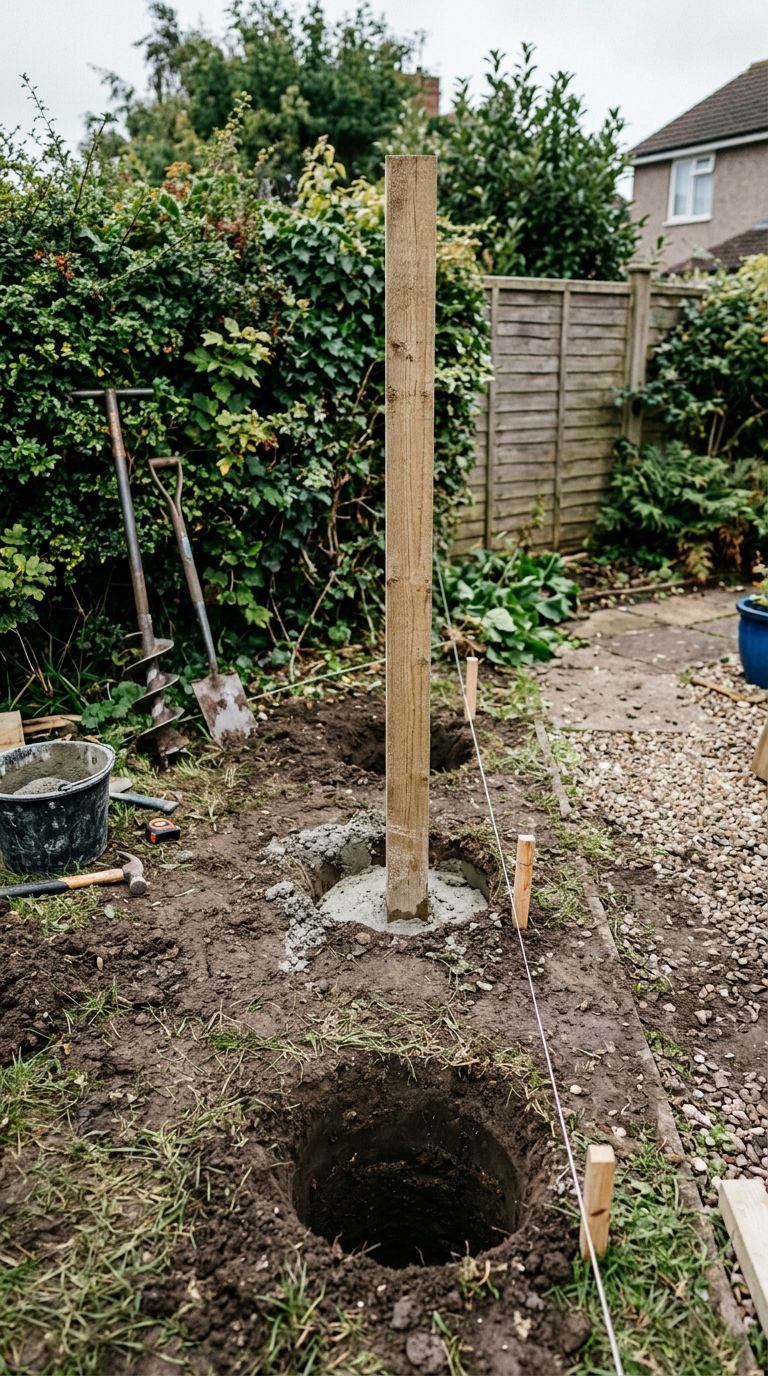
A post goes in to roughly a third of the height standing above ground, so a 1.8 metre fence wants around 600mm in the hole and more on an exposed or windy boundary. Gate posts and acoustic posts go deeper again. Shallow holes are the single most common reason a fence leans after one gale.

02

Concreting

Posts are set in wet mix concrete, plumbed, braced and left to cure before any boarding goes on. The collar is finished above soil level and sloped away so water runs off rather than sitting against the timber.

03

Spacing

Bays are kept consistent, normally under 1.8 metres centre to centre, and tightened where the fence is tall, exposed or carrying acoustic boarding. A wide bay flexes in wind, and flex is what loosens a post.

04

Gravel boards

A concrete gravel board takes the bottom 150mm of the fence, so the timber never touches wet soil or a strimmer. When ground level shifts over the years the board is the part that wears, and it is replaceable on its own without touching the rest of the run.

05

Drainage at the base

Where a boundary sits low or a garden drains towards it, we put a stone layer under the post and give the water somewhere to go, rather than letting the hole act as a sump. On heavy clay that is often the difference between a fence that lasts fifteen years and one that rots in five.

If the ground itself is the problem, levels, retaining or standing water, that is a groundworks job before it is a fencing job. We do both, so it is one team and one price. See groundworks and excavation for drainage, soakaways and retaining walls.

A fence post set in a freshly dug hole along a marked garden boundary

Post holes set out before boarding, Hampshire